
The Suited Tie Math Nobody Wants You To Run
Most players see a suited tie and assume the house is handing out free money. That assumption is exactly why the payout structure exists the way it does. When both the Player and Banker hands land on identical suited cards, the casino does not panic — it simply adjusts the odds on the side bet that most punters never bother to audit. The real question is whether the extra payout on a suited tie actually compensates for the astronomical improbability of the event, and the numbers say something brutal.
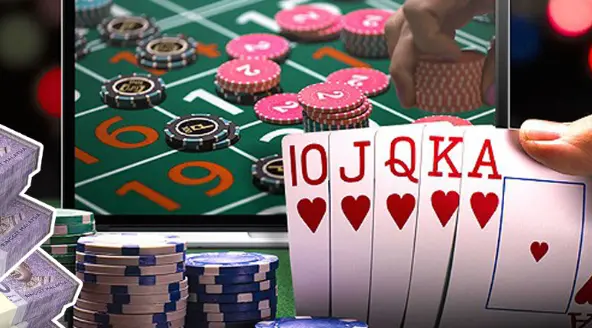
The Standard Tie Versus The Suited Variant
A conventional tie bet in baccarat typically pays 8 to 1, sometimes 9 to 1 depending on the table rules and the shoe composition. That is already a terrible wager from a pure expected value standpoint. But the suited tie — where the Player and Banker finish with the exact same rank and the exact same suit — pays dramatically more. Depending on the operator, you are looking at anywhere from 150 to 1 all the way up to 250 to 1. Some offshore books have experimented with 300 to 1 on six-deck shoes. Sounds incredible, right? Hold that thought.

Why The Probability Crushes The Payout
The probability of a standard tie in an eight-deck baccarat shoe sits around 9.5 percent. The probability of a suited tie — where both hands contain the same rank in the same suit — collapses to roughly 0.036 percent. That is not a typo. Let me put it in perspective: you are more likely to be dealt a royal flush in Texas Hold'em on your very first hand than you are to hit a suited tie in baccarat. The house knows this. The suited tie payout looks generous on the surface, but when you divide the payout by the true odds, the house edge still devours somewhere between 12 and 18 percent of your long-term action. That is worse than almost any other bet on the felt.
The Shoe Composition Variable
Here is where the audit gets interesting. The number of decks in the shoe directly affects suited tie frequency. A six-deck shoe produces a marginally higher suited tie rate than an eight-deck shoe because there are proportionally more cards of each suit-rank combination. Some sharp syndicates have exploited this by targeting tables with six-deck shoes and aggressive suited tie payouts above 200 to 1. But let me be crystal clear — even at 250 to 1 on a six-deck shoe, the edge still leans house. The variance is monstrous. You could sit through 40,000 hands and never see one. 🎰
The Payout Table Illusion
Casinos design payout tables to exploit pattern recognition bias. When a player sees "Suited Tie: 200 to 1" printed in bold next to "Tie: 8 to 1," the brain immediately anchors on the bigger number. That is not an accident. It is behavioral engineering. The actual frequency data tells a different story — one suited tie every 2,700 to 3,000 hands depending on shoe size. Multiply your average bet by 3,000 and compare that to the payout you receive once. The math does not lie. The suited tie payout is a lottery ticket dressed in a tuxedo.
What The Sharp Money Actually Does
Professional players do not touch the suited tie as a standalone wager. Ever. What they do instead is hunt for mispriced side bets in promotional environments where the operator has boosted the payout to attract traffic without recalculating the underlying probability model. If you find a book offering 350 to 1 or higher on a six-deck shoe, then you are approaching a break-even scenario. Below 300 to 1 on eight decks, you are donating. 💸
The Final Number That Matters
Run the expected value yourself: at 200 to 1 on an eight-deck shoe with a 0.036 percent hit rate, your EV per unit wagered is negative 28 percent. That is not a bet. That is a bonfire. The only scenario where the suited tie payout becomes mathematically defensible is when the operator has misconfigured the shoe penetration, the shuffle tracking is predictable, and the payout exceeds 380 to 1 on a six-deck game with deep penetration above 85 percent.